
Search for what a bathroom remodel costs in Tampa and the answers range from $4,000 to $75,000. One national site says the local average is about $6,500. A franchise says $10,000. A custom builder says $30,000 and up.
None of them are lying. They are describing completely different projects and calling all of them a bathroom remodel.
This is an honest breakdown of what bathroom renovations cost across Tampa Bay in 2026, sorted by the scope of work, followed by something almost nobody publishes: how the number changes depending on whether the home is in Hillsborough, Pinellas, or Pasco County.
Why the numbers you find online do not agree
Three different products get sold under the same name.
The one-day conversion. Franchise bath companies install an acrylic liner or wall panel system over the existing tub or shower area. Nothing behind the wall gets opened. These projects are commonly quoted between $6,000 and $15,000 in the Tampa Bay market, and they are where the low "average cost" figures come from.
The national average. Cost aggregator sites blend everything from a new vanity to a full gut into one number. The result describes no real project.
The custom remodel. A licensed contractor takes the room down to the studs or close to it, corrects what is behind the walls, builds a waterproofed tile shower, and puts the room back together under a permit. This is the project most homeowners are picturing when they start searching, and it costs more than the first two categories suggest.
A liner system is a legitimate product for the right situation, such as a sound tub surround that simply looks dated. It is not comparable to a custom remodel, and a quote for one tells you nothing about the price of the other. The most important difference is what happens behind the wall. A liner covers the existing conditions. A remodel exposes them and fixes them, which matters a great deal in a region where slow shower leaks and aging drain lines are common.
The rest of this article is about custom remodeling.
Bathroom remodel cost ranges by scope
Across the Tampa Bay market in 2026, custom bathroom projects cluster into five ranges.
Powder room or half bath refresh: $6,000 to $12,000
New vanity, top, faucet, toilet, mirror, lighting, flooring, and paint. No tub or shower, which removes the most expensive part of any bathroom. The room is small, but minimum trade charges still apply. A plumber, an electrician, and a tile setter each have to show up whether the room is 20 square feet or 80.
Custom tub-to-shower conversion: $9,000 to $18,000
The tub comes out. The drain is relocated and upsized to meet shower code. A properly sloped and waterproofed pan goes in, the walls get tile, and a glass enclosure finishes it. The rest of the bathroom stays as it is.
Where a project lands in this range depends on tile selection, glass (a framed slider versus a frameless custom panel), whether there is a niche or bench, and what the wall framing looks like once the old surround comes off.
Full hall or guest bathroom remodel: $16,000 to $30,000
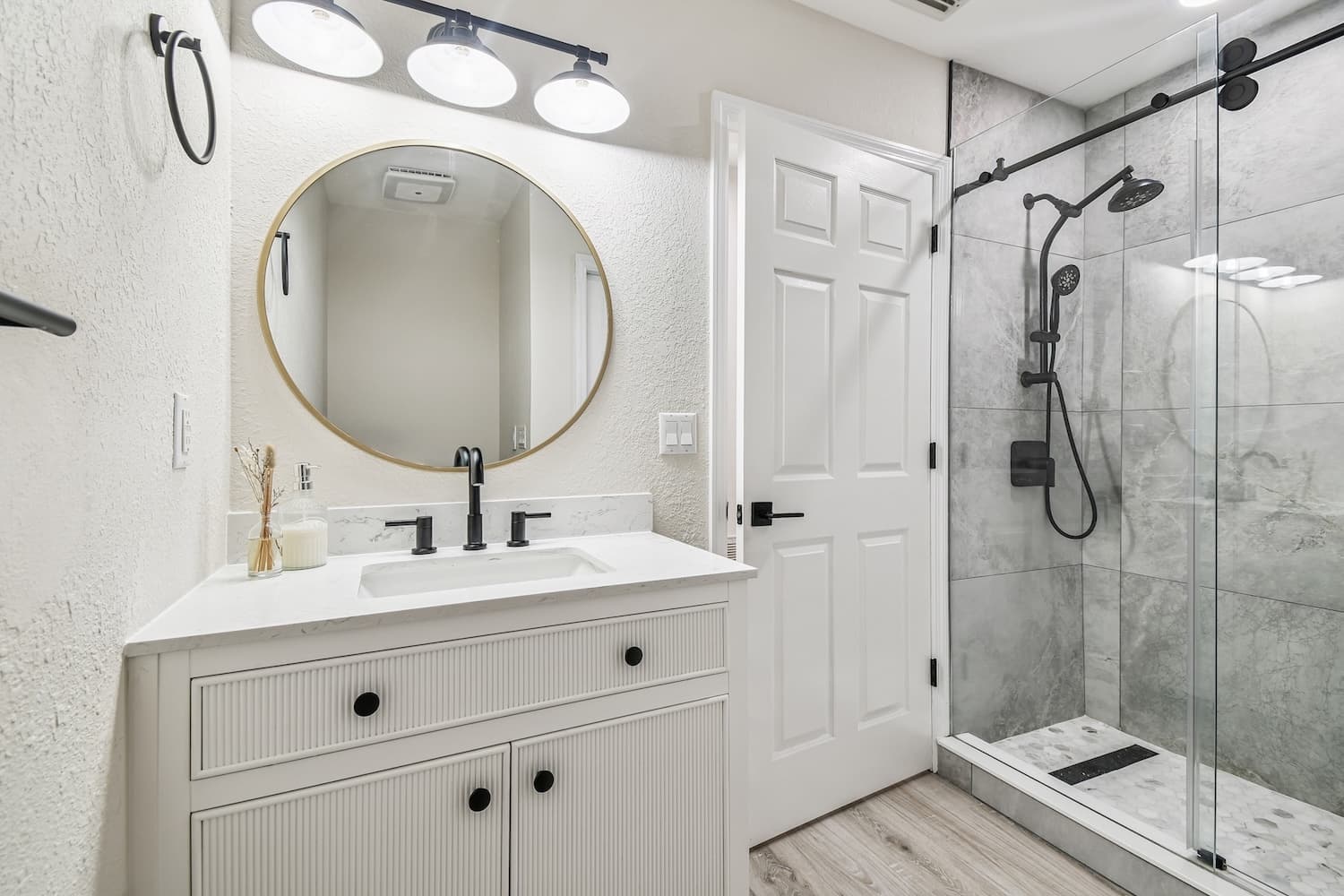
This is where most Tampa Bay homeowners land, and it is the project pictured at the top of this article.
What this typically includes: demolition to the studs in the wet area, new tub or tiled shower, new vanity and quartz top, new toilet, tile flooring, updated plumbing valves and trim, a properly ducted exhaust fan, new lighting, GFCI-protected electrical, drywall repair, and paint. The layout stays where it is.
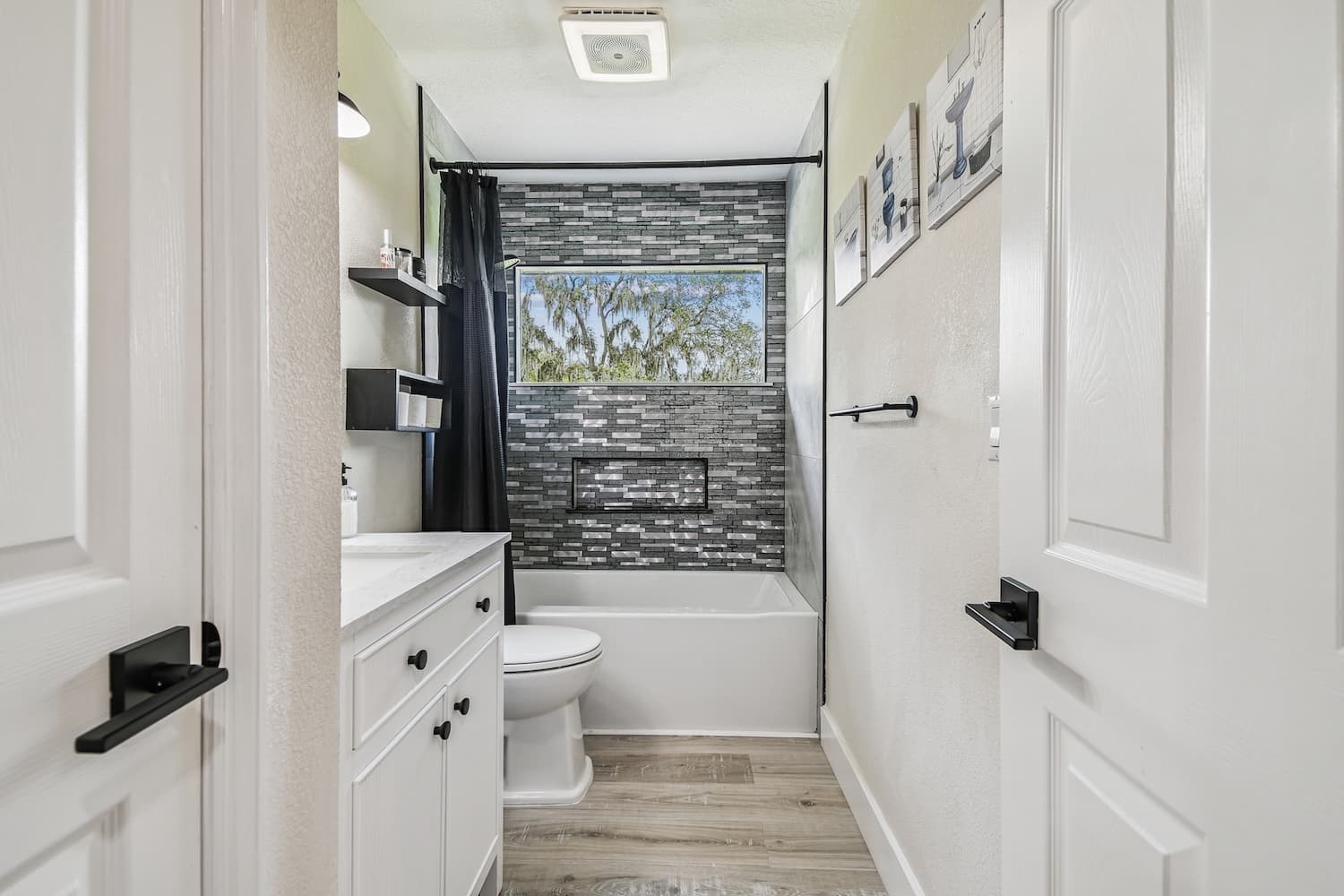
Primary bathroom remodel: $32,000 to $65,000
Primary bathrooms cost more because there is more of everything. A larger tiled shower, often with a bench, niches, and a frameless enclosure. A double vanity. More floor tile. Frequently a freestanding tub. More lighting, more glass, more plumbing fixtures.
The most common primary bath project in homes from the 1990s and 2000s is removing the oversized corner garden tub and the cramped shower stall next to it, then using that combined footprint for one large walk-in shower. That single decision tends to define the budget.
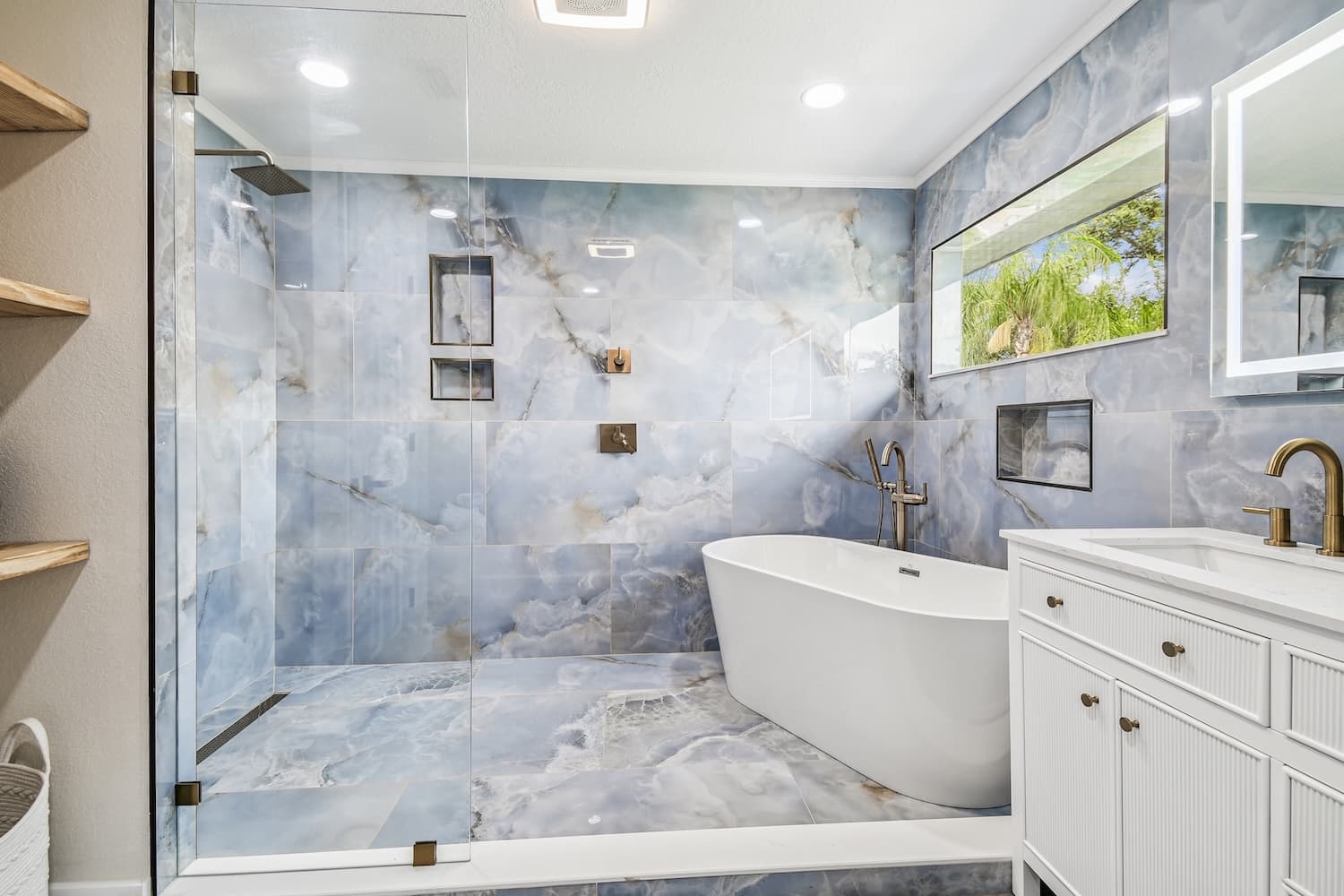
High-end primary suite with layout changes: $65,000 to $100,000 and up
Walls move. The toilet gets its own room. The shower goes curbless. Drains relocate through the slab. Finishes move into natural stone, custom cabinetry, and specialty fixtures. In waterfront South Tampa, Snell Isle, and similar neighborhoods, projects at this level are common and can run well past $100,000.
Where the money actually goes
Bathrooms surprise people because the room is small and the invoice is not. The reason is density. A bathroom packs plumbing, electrical, waterproofing, tile, cabinetry, glass, and ventilation into the smallest room in the house, and nearly every square foot needs a skilled trade.
A rough distribution for a custom Tampa Bay bathroom:
Labor across all trades: roughly 35 to 45 percent. Demolition, plumbing, electrical, tile setting, drywall, carpentry, paint, and project management. Custom tile work is slow, skilled work, and it is the reason bathroom labor runs higher as a share of budget than kitchen labor.
Tile, waterproofing, and setting materials: roughly 15 to 20 percent. The tile itself is only part of it. The waterproofing system behind the tile is what determines whether the shower lasts 25 years or 5.
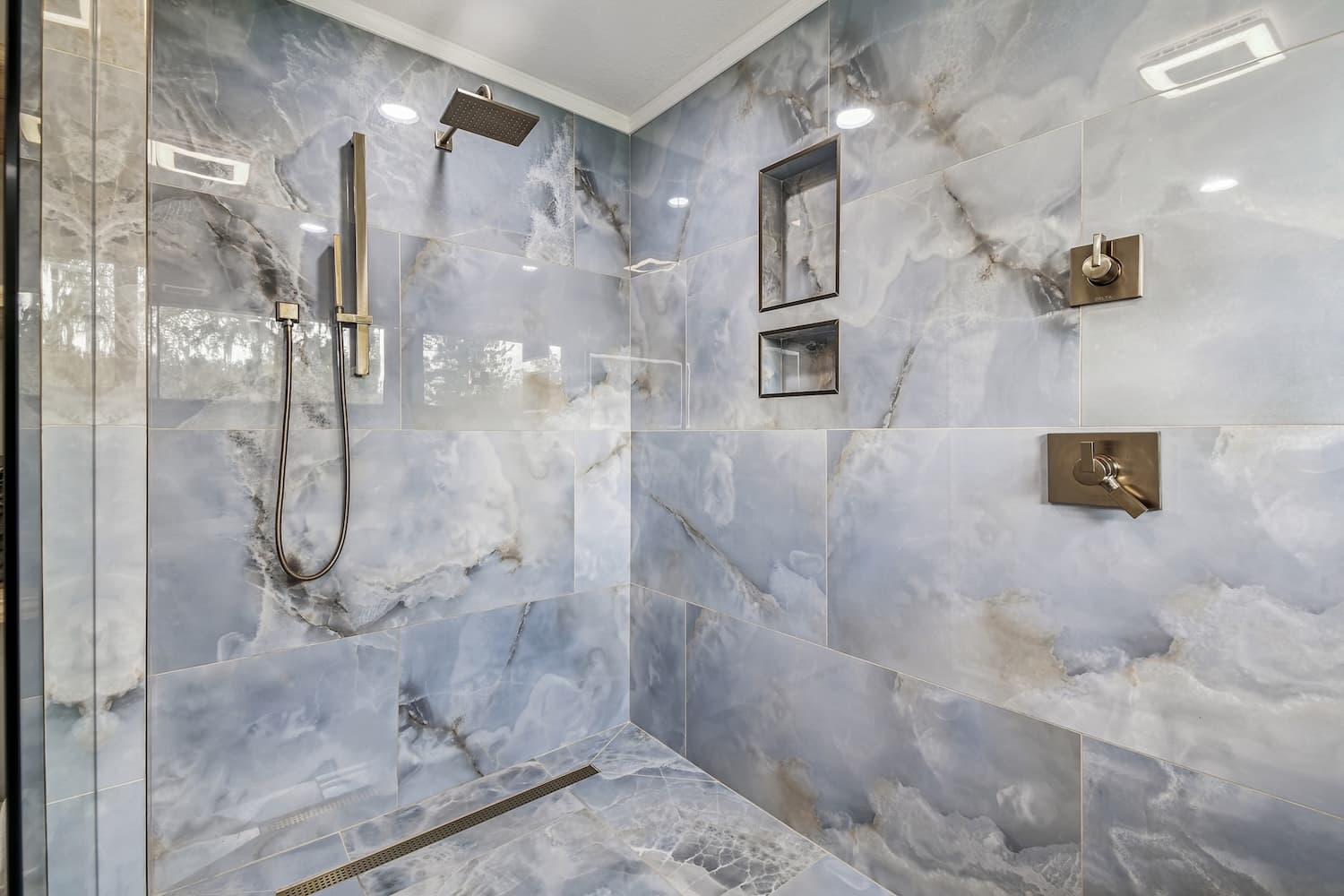
Vanity, countertop, and storage: roughly 10 to 15 percent. Stock, semi-custom, or custom cabinetry moves this number more than the countertop does.
Plumbing fixtures and valves: roughly 10 to 15 percent. This is the line item where homeowners have the most control. A complete shower trim package can cost $400 or $4,000.
Shower glass: roughly 5 to 8 percent. Frameless custom glass is measured after the tile is finished and fabricated to fit, which is why it costs more and arrives last.
Everything else: roughly 10 to 15 percent. Lighting, exhaust fan and ducting, mirrors, accessories, drywall, paint, permits, and disposal.
How your county changes the invoice
Tampa Bay is one metro area but three very different renovation environments. The same bathroom, with the same tile and the same fixtures, will not cost the same in all three counties. The differences come from the age of the housing, flood zone rules, and how permitting is organized.
Hillsborough County
Hillsborough has the widest spread of housing in the region, and the widest spread of bathroom budgets to match.
Older Tampa neighborhoods carry the most unknowns. Hyde Park, Seminole Heights, Tampa Heights, and parts of Palma Ceia have homes from the 1920s through the 1950s. Behind those bathroom walls it is normal to find cast iron drains, galvanized supply lines, plaster over wood lath, and floor framing that was notched by a plumber decades ago. Correcting those conditions commonly adds $3,000 to $10,000 to a bathroom that looked simple on the first walkthrough. That difference is covered in detail in this comparison of Hyde Park and South Tampa bathrooms.
The suburbs are more predictable. Westchase, Carrollwood, New Tampa, FishHawk, Brandon, and Riverview are largely 1990s-and-newer construction with sound plumbing and straightforward slab foundations. Budgets here track closely to the ranges above, with fewer change orders.
Two permitting offices. The City of Tampa and unincorporated Hillsborough County run separate building departments with separate portals, fees, and review times. A Brandon address and a Seminole Heights address are permitted by different offices, even though both are "Tampa" to most people.
Flood zones apply here too. Davis Islands, the Bayshore corridor, Port Tampa, and much of the South Tampa peninsula sit in FEMA special flood hazard areas, where the federal 50 percent substantial improvement rule applies. A single bathroom rarely approaches that threshold on its own, but a bathroom combined with a kitchen and flooring in the same permit period can.
Pinellas County
Pinellas is the most densely populated county in Florida, it is surrounded by water on three sides, and most of its housing was built between the 1950s and the 1970s. All three facts show up in bathroom pricing.
Drains under the slab. The typical Pinellas home is a mid-century concrete block house on a slab, with cast iron drain lines running underneath. Cast iron in Florida soil has a service life of roughly 50 to 70 years, which means a large share of the county's drain lines are at or past the end of it. A bathroom remodel is often when the problem is discovered, because a camera inspection before tile goes down is the responsible move. Replacing the failed section under a bathroom can add $4,000 to $12,000 or more, depending on how far the damage runs.
The 49 percent rule. St. Petersburg enforces the substantial improvement rule at 49 percent of the structure's depreciated value, and other Pinellas municipalities enforce their own versions. Because the calculation excludes land value, the ceiling is lower than most owners expect. A bathroom project on its own is usually safe, but it counts toward the total. The math is explained in this guide to St. Petersburg's 49 percent rule, and every St. Petersburg project the team scopes includes that check.
Twenty-four municipalities. St. Petersburg, Clearwater, Largo, Dunedin, Pinellas Park, the beach communities, and the unincorporated county each handle permits their own way. Fees and review times vary by jurisdiction. A contractor who works the county regularly knows which offices turn a bathroom permit around in days and which take weeks.
Condos. Pinellas has an enormous condo inventory, and a condo bathroom carries costs a house does not. Association approval packages, certificates of insurance, restricted work hours, elevator reservations, water shutoffs that must be scheduled with the building, and drain stacks that cannot be moved because they serve the units above and below. Expect a condo bathroom to run 10 to 20 percent above the same scope in a single-family home, mostly in labor and logistics.
Pasco County
Pasco is two different markets that happen to share a county line.
Central and east Pasco is new construction. Wesley Chapel, Land O' Lakes, Lutz, Odessa, and Trinity are dominated by production homes built from the late 1990s to today. The plumbing is modern, the wiring is current, and surprises behind the walls are rare. That makes Pasco the most predictable county in the region for bathroom budgets.
The common project here is the builder-grade upgrade. Production builders standardized on fiberglass tub and shower inserts, cultured marble vanity tops, and the corner garden tub in the primary bath. Homeowners ten to twenty years in are replacing all three. Because the infrastructure is sound, more of the budget goes into finishes the owner can see.
One caution: many newer slabs in these subdivisions are post-tensioned, meaning steel cables run through the concrete under tension. Moving a drain in a post-tensioned slab requires locating those cables before anyone cuts. It is manageable, but it is not a step to skip, and it should appear in the quote if the layout is changing.
West Pasco is older and closer to the water. New Port Richey, Port Richey, Holiday, and Hudson have large numbers of 1960s and 1970s block homes, many of them in flood zones along the Gulf. These behave much more like Pinellas projects, with the same cast iron and substantial improvement considerations.
One permitting office covers most of it. Apart from a handful of small cities, Pasco County handles permitting for the whole county, which keeps the process consistent. HOAs rarely regulate interior work, but many regulate dumpster placement, contractor parking, and work hours, so it is worth checking the rules before demolition day.
What most bathroom quotes leave out
Four items routinely surface after a contract is signed.
Water damage behind the shower. A failed shower pan or a slow valve leak can run for years without showing on the finished side. Rotted studs, damaged subfloor in second-story baths, and mold remediation are common discoveries in any shower older than about 20 years. No one can price this accurately before demolition, but an honest quote tells you it is possible and carries an allowance or a clear unit price for it.
Supply and drain lines past their service life. Cast iron and galvanized steel in older homes, and polybutylene supply lines in some homes from the 1980s and early 1990s. When the walls are open is the cheapest moment these will ever be to replace.
Electrical corrections. Current code calls for GFCI protection and a dedicated 20-amp circuit for bathroom receptacles. Many older bathrooms have neither. It is also common to find an exhaust fan that vents into the attic instead of outdoors, which pushes moisture into the roof structure. Correcting it means running duct to an exterior termination.
Glass lead time. Frameless enclosures are measured only after tile is complete, then fabricated. That adds one to three weeks at the end of the project during which the bathroom looks finished but the shower is not usable. It costs nothing extra, but it belongs in the schedule you are given.
A quote that mentions these items is not padding the job. A quote that ignores them is either inexperienced or counting on change orders.
Accessibility is cheaper now than later
A large share of Tampa Bay homeowners plan to stay in their homes through retirement. If that is the plan, a bathroom remodel is the time to build for it, because most of the cost is in work that is already happening.
Solid wood blocking inside the walls for future grab bars costs very little while the studs are exposed. A wider doorway is a modest framing change. A comfort-height toilet and a handheld shower on a slide bar are fixture selections, not upgrades.
The larger decision is a curbless shower. On a slab foundation, a true zero-threshold entry means recessing the concrete in the shower area so the floor can slope to the drain. That typically adds $2,500 to $6,000. Retrofitting it later means tearing out a finished shower, which costs several times as much.
Permits
In all three counties, a bathroom remodel that alters plumbing, electrical, or structure requires a permit. Replacing a toilet, faucet, or vanity in the same location generally does not. Relocating a drain, converting a tub to a shower, adding circuits, or moving a wall does.
Permit fees for a typical bathroom run a few hundred dollars, a small fraction of the project. Skipping the permit saves almost nothing and creates real exposure: problems at resale, complications with insurance claims on later water damage, and in flood zones, violations that can force retroactive compliance. Since the 2024 storm season, enforcement across the region has tightened noticeably. A contractor who suggests skipping the permit is telling you something about how the rest of the job will be run.
Timeline expectations
Custom tub-to-shower conversion: two to three weeks.
Full hall or guest bathroom: three to five weeks.
Primary bathroom: six to ten weeks, longer with layout changes or custom cabinetry.
These are construction durations. Design, selections, material ordering, and permitting happen before demolition and typically add three to eight weeks, depending on the jurisdiction and how quickly decisions get made. On a well-run project, every material is on site or confirmed before the first tile comes off the wall. The bathroom you cannot use should be torn apart for as short a time as possible.
What comes back at resale
Bathrooms are consistently among the better-returning renovation projects, and like kitchens, the return is not linear. Industry cost-versus-value data has shown for years that midrange bathroom remodels recoup a larger share of their cost than upscale ones. A clean, current $24,000 hall bath returns a higher percentage than a $90,000 primary suite.
Two local notes. First, replacing a dated garden tub with a large walk-in shower is what Tampa Bay buyers currently expect in a primary bath, and it photographs well in a listing. Second, keep at least one bathtub somewhere in the house. Homes with no tub at all narrow the buyer pool, particularly among families with young children.
As with any renovation, resale is only part of the math. Most people remodeling a bathroom are going to use it every day for the next ten or fifteen years.
Common questions
How much does a small bathroom remodel cost in Tampa?
A full custom remodel of a small hall bathroom, roughly 40 to 50 square feet, typically runs $16,000 to $24,000 in 2026. Small bathrooms do not scale down as much as people expect, because the fixtures, the trades, and the permit are the same regardless of square footage.
How much does a walk-in shower cost?
A custom tiled walk-in shower built in place of an existing tub or shower generally runs $9,000 to $18,000, including the drain work, waterproofing, tile, and glass. Large primary bath showers with benches, multiple niches, and frameless enclosures run $15,000 to $28,000 as a component of the full remodel.
Why is my quote so much higher than the franchise price I saw advertised?
Because it is a different product. Advertised franchise pricing is for a liner or panel system installed over existing conditions in a day or two. A custom remodel involves demolition, plumbing, waterproofing, tile, and a permit. Compare custom quotes only with other custom quotes that list the same scope.
Can I stay in the house during the remodel?
Yes, in nearly every case, as long as there is a second bathroom. For single-bathroom homes, the project can be sequenced to keep the toilet functional for most of the job, but plan for several days without a usable shower.
Should I remodel the bathroom and kitchen at the same time?
If both are planned within the next couple of years, combining them usually saves money on mobilization, permitting, and trades that are already on site. In a flood zone, the combined cost needs to be checked against the substantial improvement threshold first. The Tampa kitchen remodel cost guide covers that side of the budget.
Getting a real number for your bathroom
Every range in this article is a starting point. The real number for a specific bathroom depends on the size of the room, the age of the home, what is behind the walls, the finishes selected, and the jurisdiction it sits in.
The only way to get that number is a walkthrough. Quality Restoration & Renovations is a Florida licensed general contractor (CGC1523357) that has been remodeling bathrooms across Hillsborough, Pinellas, and Pasco counties for over 25 years, from 1920s Hyde Park bungalows to St. Petersburg block homes to new construction in Wesley Chapel. Recent work is in the project gallery, and the full list of communities served is on the service area page.
Every consultation starts with the house itself: what is there, what needs to change, and what a realistic budget looks like for that scope in that county. The team provides a detailed written estimate after a free in-home consultation. Financing is available. No pressure, no obligation.
If you are planning a bathroom remodel anywhere in Tampa Bay and want a straight answer about what your project would cost, reach out for a free consultation.